
Tick Safety: How to Remove a Tick
Firstly, don’t panic. Not all ticks carry pathogens that make people sick.
However, it is important to remove the tick/s as soon as possible. A literature review found that, in animal models, transmission can occur in less than 16 hours, and the minimum attachment time for infection transmission has never been established.(1)
If you have a history of allergic reactions to tick bites, a doctor should remove the tick. This should take place at a medical facility, where resuscitation equipment is available.
Current science:
Research supports two main methods for removing attached ticks: fine‑tipped tweezers for prompt extraction, and ether‑containing freeze spray to kill the tick in situ before removal.
Why prompt, low‑stress removal matters:
The key risk with any method is stressing the tick, which can cause it to express more saliva—potentially increasing delivery of toxins, allergens, or pathogens. Ticks inject saliva during feeding; so agitation, such as squeezing or burning, may prompt regurgitation, increasing the risk of allergy/anaphylaxis or infection.
Option 1: Mechanical removal
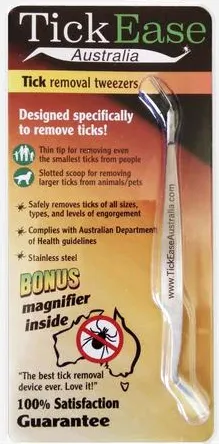
- Using fine-tipped tweezers or a tick prong (see TickEase Australia’s fit-for-purpose tick removal tool, left), press the skin down around the tick’s embedded mouth.
- Grip the mouth part firmly, then gently detach the tick using an upward motion with steady, even pressure.
- Avoid squeezing the tick’s body. Disinfect the bitten area and the tweezers/prong before and after removal.
Option 2: Freeze spray
Apply ether‑based freeze spray (e.g., Wart‑Off) directly to the tick from 1 cm away (5 short bursts), wait 5–10 minutes for death (check legs/movement), then remove with fine-tipped tweezers or a tick removal tool if needed.
Australian research shows using freeze spray reduces allergic reactions (including anaphylaxis) in preliminary human studies, particularly for paralysis ticks (Ixodes holocyclus). Further trials are needed to determine if using freeze sprays affect infection outcomes.
Never attempt to kill the tick by burning it, or covering it with methylated spirits, alcohol, petroleum jelly or nail polish remover.
Larvae and nymph removal
Due to their small size and large numbers, these can be difficult to remove via the above method. Individual removal may not be possible.
- The NSW Northern Beaches Council advise to “Use a permethrin cream to kill them and then shave them from your skin.” Find Permethrin at chemists (NB. Permethrin is poisonous to cats and toxic in waterways).
- Australian Government agencies recommend using freeze or ether sprays to kill ticks and waiting for them to drop off.
Store the tick
Store the tick in a ziplock plastic bag. Label the bag with your name, date, site of the bite, and the tick attachment time. Place this in your freezer for safekeeping, or contact us to have the tick tested for pathogens.
Feeling ill after the tick bite
If you notice a rash or become ill (e.g. flu-like symptoms – headaches, fever, aches, fatigue, swollen glands) following a tick bite, seek treatment as soon as possible to lessen the likelihood of ongoing symptoms. Please contact us.
Treatment should continue until after symptoms have resolved.